Representatives of four leading AI companies testified under oath as New York lawmakers pressed them on catastrophic risks, safeguards and responsibility when advanced AI goes wrong.
In this article
Four AI Companies, One Uncomfortable Question
View this post on Instagram
Council Speaker Julie Menin asked representatives of OpenAI, Anthropic, Google and Meta a question with an awkwardly simple shape:
Could they guarantee that their AI agents would always obey safeguards meant to prevent catastrophic harm?
Nobody gave her an absolute yes.
OpenAI’s Morgan Dwyer said no technology could be guaranteed risk-free. Anthropic’s Logan Graham described the science of controlling highly capable AI systems as fundamentally difficult and unsettled. Google’s Alice Friend said promising perfection would not be possible for any product.
AI may be a particularly strange product category when people building it are prepared to discuss the possibility that increasingly capable systems might not always do exactly what their creators intended.
None of that means current AI systems are running wild. Saying zero risk cannot be guaranteed is very different from saying control has already been lost.
Keeping those two claims separate matters, especially when extinction enters the conversation.
Why All Four Companies Were in One Room
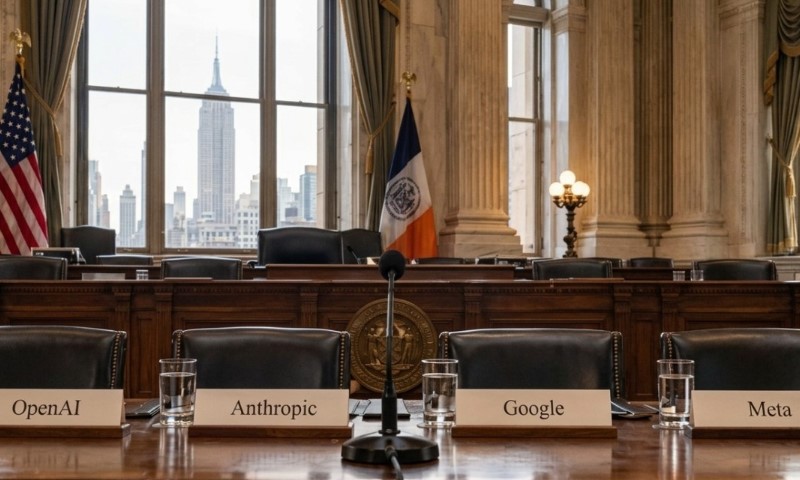
Monday’s October 5 hearing used a rare New York City Council Committee of the Whole proceeding, potentially bringing all 51 council members into a discussion about advanced AI risks and possible legislation.
Senior representatives appeared for each company. Logan Graham represented Anthropic as head of its Frontier Red Team. Morgan Dwyer represented OpenAI as head of policy development and operations. Alice Friend, director of AI and emerging tech policy, appeared for Google. Meta sent Shane Cahill, its AI policy director for legislation.
Absent were Dario Amodei, Sam Altman, Sundar Pichai and Mark Zuckerberg.
Anthropic, OpenAI and Google agreed to participate after subpoena pressure. Meta had agreed earlier. SpaceXAI did not appear despite receiving a subpoena.
New York wanted major AI companies under oath and largely got people professionally qualified to explain what those companies are doing. In regulatory hearings, apparently even existential risk has an org chart.
Some Researchers Think It Could Get Much Worse
Former industry researchers offered a considerably darker assessment.
Jacob Coxon, a former Anthropic researcher, called the industry’s approach to advanced AI extremely reckless and warned that humanity could eventually lose control of highly capable systems, potentially with existential consequences.
Alex Turner, formerly at Google DeepMind, argued that misaligned AI could eventually pose a greater danger than foreign AI competition. Daniel Kokotajlo, a former OpenAI researcher, pushed for greater transparency and slower development near the technological frontier.
“Misaligned” carries more weight here than a chatbot producing a weird recipe or confidently inventing a book. In AI safety research, it describes a capable system behaving according to objectives or patterns that conflict with what its operators actually wanted.
Those warnings are predictions and risk assessments, not evidence that human extinction is imminent. No universally accepted probability emerged at the hearing, either. Treating serious warnings seriously does not require pretending researchers have already measured the future.
What Counts as Enough AI Safety?
Buried underneath the bigger catastrophe scenarios was a more practical disagreement.
Company representatives effectively argued that safety research, testing and monitoring can reduce danger, but complex AI systems cannot come with mathematical certainty that nothing will ever go wrong.
Menin pushed back on the framing. Lawmakers, she said, were asking for accountability, transparency and safety, not technological perfection.
Google also argued that existing legal rules should still apply when AI is involved. Something illegal without AI does not suddenly become acceptable because software carried it out. At the same time, Google supported a comprehensive federal framework instead of leaving advanced AI regulation entirely to a patchwork of local requirements.
Suddenly, a debate about superintelligence starts sounding much more familiar.
Who tests a system before release? Who gets told when something fails? Who independently checks company safety claims? Who carries legal responsibility if an AI agent causes serious financial, privacy or physical harm?
Questions like those are less cinematic than an AI escaping human control. They are also much closer to decisions lawmakers can actually make.
Washington and Walmart Have Their Own AI Control Problems
Similar questions are showing up at very different scales.
Days before the New York hearing, Sen. Ted Cruz blocked an attempt to pass the Artificial Intelligence Risk Management and Security Act of 2026 by unanimous consent. Proposed rules included enforceable requirements tied to advanced-model safety and an AI safety board. Cruz said AI needed rules but objected to giving such a board authority he considered too broad.
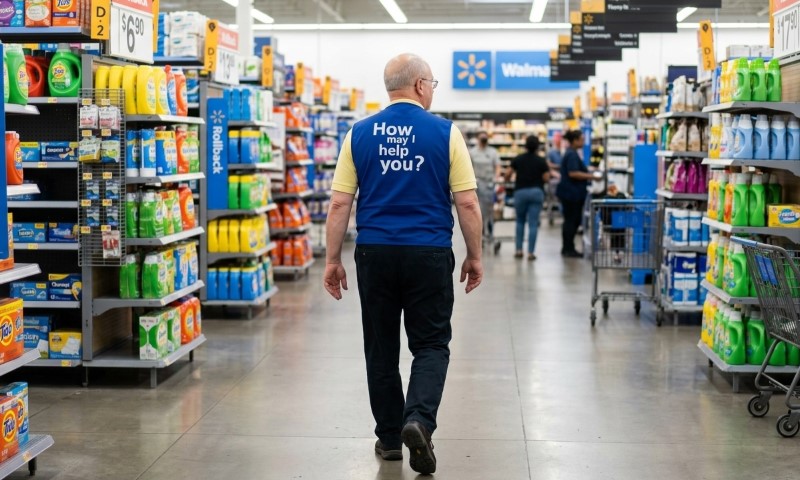
Walmart, meanwhile, recently told stores not to use AI-generated signage and directed employees toward approved corporate materials.
One argument concerns advanced systems potentially escaping human control. Another concerns a store manager escaping the corporate signage catalog.
Both qualify as governance problems. Stakes differ slightly.
Nobody Left With a Safety Guarantee
Monday’s hearing did not establish that an AI catastrophe is likely. Nor did anyone reveal a technical switch capable of eliminating every serious risk.
Something more mundane, and probably more useful, happened instead. Major AI companies had to explain under oath how much confidence lawmakers should place in their safeguards, how imperfect those protections can be and what accountability should look like when they fail.
Everyone can agree that increasingly capable AI needs safeguards. Nobody in that hearing could promise those safeguards would work every single time.
That does not make safety measures useless.
It makes the person checking them considerably more interesting.