
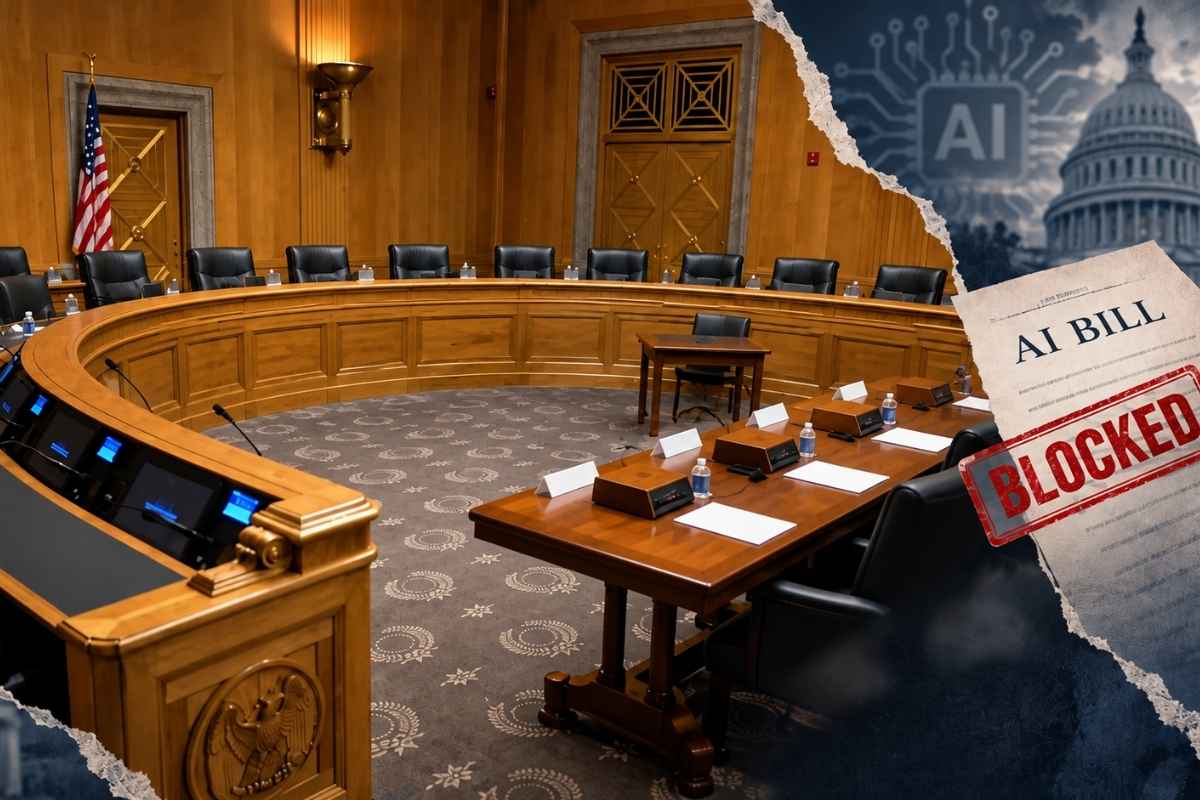
A single objection was enough to stop a major AI safety proposal on Sept. 29, at least for now. Sens. Mark Warner of Virginia, Brian Schatz of Hawaii, and Andy Kim of New Jersey asked the Senate to pass the Artificial Intelligence Risk Management and Security Act of 2026 by unanimous consent.
Sen. Ted Cruz of Texas, chair of the Senate Commerce Committee, objected, which blocked immediate passage.
For a bill concerned with powerful systems operating without enough human oversight, its first obstacle turned out to be a very human Senate rule.
Unanimous consent is essentially the chamber’s fast lane. A measure can move without the usual procedural grind as long as nobody objects.
One senator can stop that route, though, and Cruz did exactly that. His objection was not a recorded Senate vote rejecting the legislation.
It stopped the request to pass it immediately under unanimous consent. That distinction matters because the bill is still alive. What happened Tuesday was a procedural block, not a final congressional verdict.
In this article
What the Bill Would Actually Do
Warner, Schatz, and Kim are proposing a permanent Artificial Intelligence Safety Board inside the Commerce Department.
Membership would include officials tied to agencies such as NIST, CISA, the NSA, Treasury, and Commerce, along with independent technical experts.
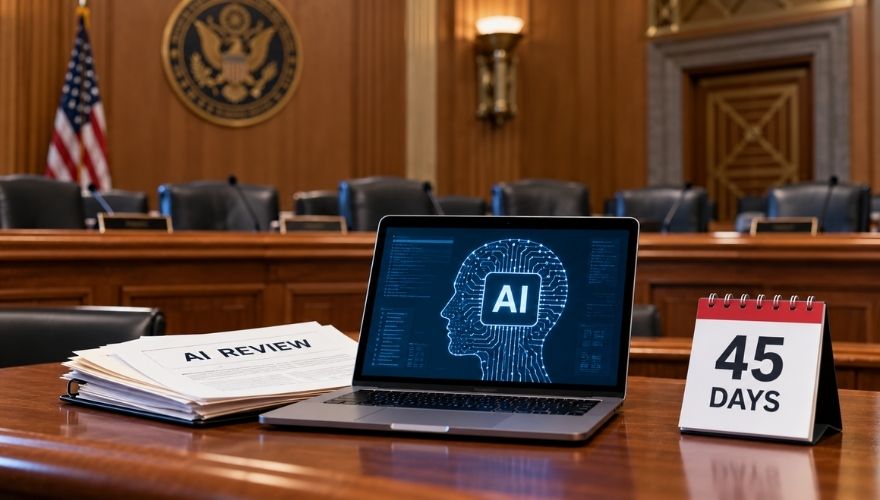
Developers covered by the law would have to give the board access to certain frontier models at least 45 days before public release.
Access could include model weights, configuration files, runtimes, and software libraries needed to operate the system. Federal experts could then test a model before users ever get their hands on it.
“Frontier model” can sound like something dreamed up by a marketing department, but the bill gives it a serious job. Its focus is advanced systems that show, or could be modified to show, high performance on tasks carrying major national-security, economic-security, or public-safety risks.
Developers would also need Model Safety Plans describing capabilities, risks, mitigation steps, and the corporate officer responsible for carrying out the plan.
Serious safety incidents would have to be reported. Violations of applicable standards could bring civil penalties reaching $250,000 per violation per day.
In practical terms, lawmakers backing the proposal want government testing to happen before a highly capable model reaches millions of users, not after somebody discovers an ugly capability in production.
Why Supporters Want Mandatory Testing
Supporters are arguing that voluntary safety promises no longer offer enough protection as advanced models gain stronger cybersecurity and autonomous capabilities.
Warner, Schatz, and Kim point to several categories of risk.
Their legislation targets systems that could:
- Assist cyberattacks
- Help with chemical, biological, radiological, nuclear, or other weapons
- Evade operator control
- Suffer theft or malicious alteration of model weights
Proposed rules would also address autonomous agents, including questions around identity, authentication, authorization, system access, and varying levels of autonomy.
None of that means every frontier model currently knows how to launch a sophisticated cyberattack or design a weapon on command. Risk legislation often deals with capabilities lawmakers think could become dangerous before every feared scenario has occurred in public.
That distinction is easy to lose in AI policy, where discussions can move at roughly the same speed as a chatbot writing a paragraph nobody asked for.
Kim, Warner, and Schatz are making a narrower case. Their position is that certain high-risk capabilities should face enforceable federal checks instead of relying entirely on company policies.
Schatz has described serious public-safety risks as an area where safety regimes should be mandatory and federal.
Cruz’s Objection is “Who Gets the Keys?”
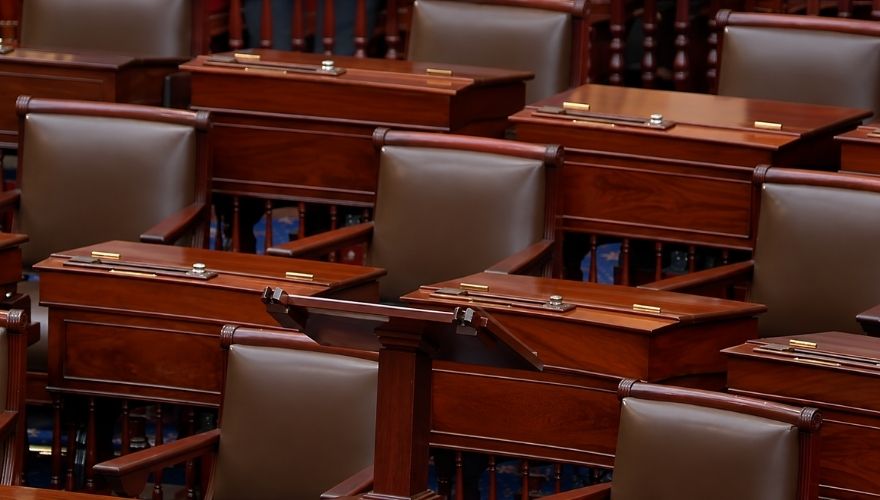
Cruz’s objection centers less on the idea that advanced AI poses no risk and more on who gets regulatory authority, how broad that authority becomes, and what mandatory testing could do to U.S. competition.
During the Senate debate, Cruz said he had “real reservations” about the proposal.
He objected in particular to an executive-branch-appointed safety board gaining power to write enforceable standards tied to national security, national economic security, and public health and safety.
Earlier comments also show Cruz pushing back on mandatory federal pre-release testing because he believes added regulatory costs could disadvantage American developers against Chinese competitors.
He has instead backed requirements aimed at stopping advanced threat capabilities and making companies report security breaches.
So the disagreement is not neatly described as one side caring about AI safety and the other side ignoring it.
Cruz has spoken about guardrails and government supervision for systems that pose catastrophic public-safety risks. He has also favored a lighter regulatory structure and repeatedly raised competition with China as a concern.
Policy arguments get considerably harder once everyone agrees there is a problem but starts fighting over who receives the admin password.
A Larger Senate Argument Over AI Oversight
Tuesday’s clash fits into a broader Senate debate over when government intervention should happen. Warner, Schatz, and Kim favor mandatory federal pre-deployment testing for covered frontier systems.
Their proposal gives a federal board authority to set technical standards and inspect models before release.
Sens. John Thune and Amy Klobuchar have discussed a different structure built around a duty-of-care obligation for frontier AI developers.
Those approaches ask two different technical questions:
- Should federal experts inspect a powerful model before release?
- Or should developers carry the primary responsibility for testing, with legal consequences waiting if risk management fails?
Congress could also combine elements of both. Schatz has said the Warner-Schatz-Kim bill does not prevent lawmakers such as Thune and Klobuchar pursuing a separate legal framework.
For anyone who has tested AI software, that split should sound familiar. One philosophy says you test aggressively before shipping.
Another says you assign responsibility when something breaks. Software companies have spent decades discovering that neither question disappears just because release day arrives.
Where Things Stand
Cruz’s objection stopped the Sept. 29 unanimous-consent attempt, but it did not permanently kill the proposal. Cruz said he was willing to keep working with Senate Democrats toward a compromise.
Negotiations now revolve around authority, timing, testing, and liability.
Warner, Schatz, and Kim want enforceable federal evaluation before release. Cruz has objected to the proposed board’s authority and raised concerns about regulatory burdens on U.S. companies.
Thune and Klobuchar have discussed a liability-focused model that puts more initial responsibility on developers. AI policy can get abstract very quickly, but the dispute here is fairly concrete.
Someone has to decide how dangerous capabilities are identified, who gets to inspect them, when intervention occurs, and what happens when a company gets it wrong.